
2-Day Combos Offers: Xcaret, Xel-Há, Xplor & Chichén Itzá
Two of four parks and sites on one booking, taken up to fifteen days apart, with food, drinks, a guide and hotel pickup in the fare.
From $280 per person
Check AvailabilityBefore it was a park this was a harbour, and before that a place people left from rather than came to. The short version: Maya pilgrims put to sea here to cross to Cozumel, an architect bought five hectares in 1984 to build a house, and what he found while clearing it became the park you buy a ticket for. If you want the ticket rather than the story, the xcaret eco park are compared elsewhere.
The settlement here was called Polé. It sat on the coast at the narrowest practical crossing to Cozumel, and that is what it was for: a departure point. Its population peaked between roughly 600 and 900 AD and the place had its real importance later, in the Postclassic, when the crossing mattered most.
You are standing on a working coastline rather than a ceremonial centre. That is worth holding on to as you walk the grounds, because the scale of the modern park makes it easy to read the stonework as decoration.
Ixchel was the goddess whose temples stood on Cozumel, and the crossing from this shore was a pilgrimage to them. Women in particular made it. The sea between is short by the map and awkward by the weather, which is why a departure point on this exact stretch of coast was worth maintaining at all.
The park stages a version of that crossing as an annual event, and in 2026 it is not running. What happened and why is on the events page, because the reason is recent and has nothing to do with the sea.
Stone structures from the settlement stand inside the grounds, on the paths between the water and the theatre. Admission covers them, nobody checks a separate ticket, and most visitors pass them on the way to something else. That is a fair description rather than a complaint: this is a water park built over an archaeological site, and it does not pretend otherwise.
If the archaeology is what you are here for, the two-day combination that adds Chichén Itzá is the fare that takes it seriously. A day at Xcaret alone will give you the stones in passing.
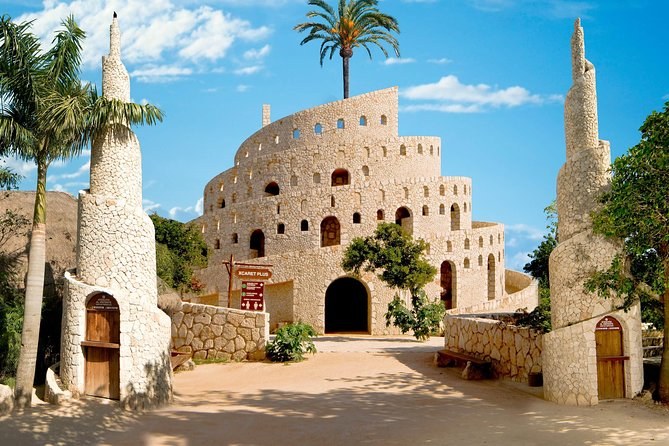
Miguel Quintana Pali, an architect, bought five hectares of the Riviera Maya in 1984 to build himself a house. Clearing the land, he found cenotes and underground rivers running through the limestone beneath it. The house plan did not survive the discovery.
He brought in the Constandse brothers — Oscar, Marcos and Carlos — as partners, and the five hectares became the first stretch of a park. The rivers you float today are the ones that were found in the clearing.
Xcaret opened in December 1990. The operator publishes that month itself, which is worth saying because the most-read encyclopedia entry gives 1991 in its infobox and December 1990 in its own text. Where the company and a secondary source disagree about the company's own opening, the company wins.
What opened was far smaller than what you visit. More than fifty attractions now sit inside one gate, and almost all of them were added in the thirty-six years since.
Everything else the group runs grew out of this one park, and the dates are the company's own. Two of the parks in the timeline below are ones you can book alongside Xcaret on a single fare, which is the practical reason for printing it here.
| Year | What happened |
|---|---|
| 1984 | Miguel Quintana Pali buys five hectares in the Riviera Maya to build a house, and finds cenotes and underground rivers while clearing the land. |
| 1990 | Xcaret opens in December, with the Constandse brothers — Oscar, Marcos and Carlos — as partners. |
| 1995 | The permit for a second park, Xel-Há, is granted. |
| 2009 | Xplor opens. |
| 2010 | Archaeological tours begin. |
| 2013 | Three at once: Xplor Fuego, Xoximilco and Xenotes. |
| 2016 | Xenses opens. |
| 2017 | Hotel Xcaret México opens. |
| 2019 | Xavage opens, and the company becomes Grupo Xcaret. |
The company took the name Grupo Xcaret in 2019. The year before, it won the Liseberg Applause Award, given to one park in the world at a time and voted on by the industry.
The site's past is not left to the stones. It is the argument of the evening show, which runs chronologically from the pre-Columbian era forward, and of the artisan's village, where the daily life of a pre-Hispanic settlement is performed rather than displayed behind glass. Whether that is interpretation or theatre is a judgement you can make on the night.
What it is not is a museum with a curator's label. If you want the reading before you go, the guide to what is inside lists what the ticket covers and what it does not.
Entry on its own, a coach day from Cancún, or two days that add Chichén Itzá: the fares buy very different visits.
The 1984 purchase, the December 1990 opening, the partners, the later parks and the 2018 award are Grupo Xcaret's own published history, checked 22 September 2026. The attraction count and the show are the operator's. The Polé material — the crossing to the temples of Ixchel and the occupation dates — rests on secondary encyclopedic sources rather than on an excavation report, and nothing beyond the pilgrimage and those dates is asserted here.
Two of four parks and sites on one booking, taken up to fifteen days apart, with food, drinks, a guide and hotel pickup in the fare.
From $280 per person
Check Availability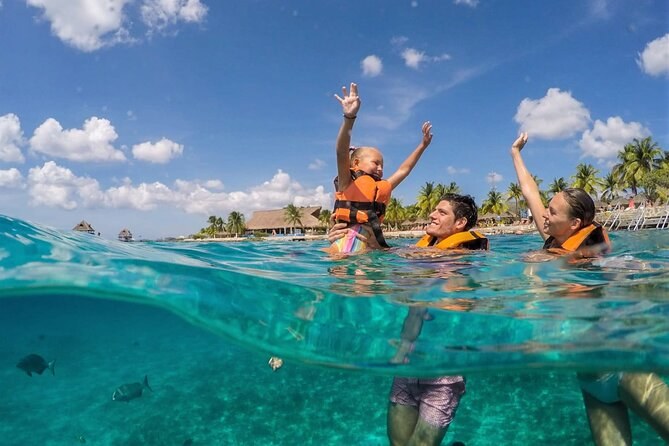
A catamaran day to the island opposite, with the ferry both ways, snorkelling gear, lunch and drinks. It does not enter the park, and port taxes are paid on the day.
From $195 per person
Check Availability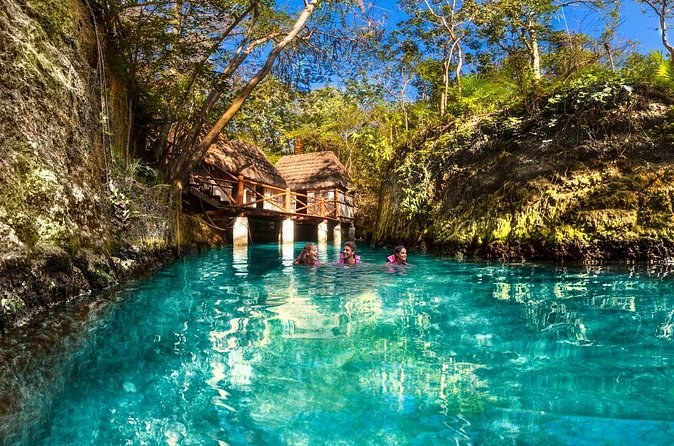
The ticket on its own, in three grades: park entry, the rivers, the beaches and the evening performance, with no transport of any kind.
From $113 per person
Check AvailabilityNext: see what is inside today, find out how to reach the gate, or compare every fare on Xcaret Tours.