When to Visit Xcaret: Rain, Heat and the Week the Park Changes

The nearest official weather record sits about 10 km up the coast and covers 1998 to 2026. It says March is dry, October is not, and August is hot. What it cannot tell you is the hour to arrive, which matters more to a day at the xcaret eco park than the month does.
What decides when to come?
Three things, in this order: rain, heat, and whether you want the park at its busiest. The figures you will see below come from the national weather service station at Playa del Carmen, about 10 km north of the gate, so treat them as the coast's numbers rather than a reading taken at the park. The month-by-month record has all twelve rows.
Which are the driest months?
March, by a clear margin, at 35.1 mm on the record. February follows at 52.3 mm and April at 40.9 mm. Those three are the driest stretch of the year and the most comfortable for a day spent partly out of the water, with mean highs from 29.1°C to 31.6°C.
The cost to you is that everyone else has worked this out too, and the rivers still close at 5:30 p.m. however bright your afternoon is.
January and December sit just outside that window at 76.8 mm and 89.4 mm, with the year's coolest mean highs at 28.5°C and 29.4°C. If you would rather walk the site than swim it, they are the kindest months for the distances involved.
Which are the wettest?
If you are choosing between two dates and one falls in the second half of the year, the rainfall column is the honest way to compare them.
October, at 290.4 mm, which is more than double what falls in May and nearly nine times March. September follows at 173.4 mm and June at 200.4 mm. November is wetter than it looks at 159.8 mm. What the record cannot tell you is when in the day the rain falls, so treat these as the odds rather than a forecast.
Does rain spoil a day here?
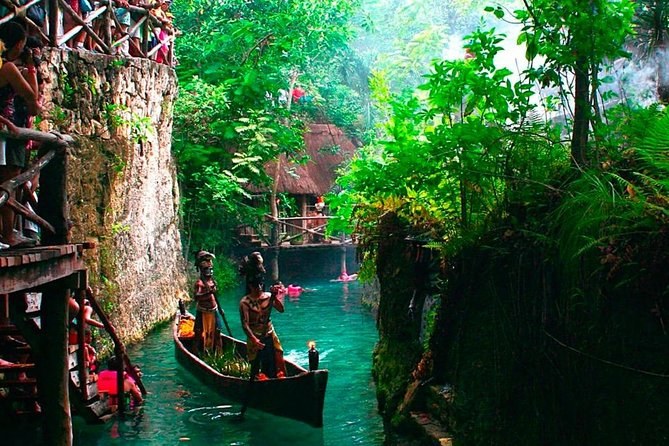
Less than it would at most attractions. You spend much of the day in water anyway, and the rivers run under the ground. What rain costs you is your beach hours, the walk between zones and the queue outside the theatre. Take a dry bag for whatever you need to keep dry.
How hot does it get?
August is the hottest month on the record, with a mean high of 33.3°C, followed by July at 33.1°C. One traveller's single complaint about an otherwise good day was the heat and the humidity. Between June and September, give the shaded attractions the middle of your day and the water your morning.
Should I avoid the hurricane months?
June to November is the Atlantic hurricane season, and it is also the wettest and warmest stretch of the year here. Most days in it are hot and wet rather than dangerous. Book a fare that carries the 24-hour cancellation window, which is all of them here except the cenote day.
The week the park is not itself
From 30 October to 2 November 2026 the park stages the Festival of Life and Death Traditions, its twentieth edition, with Guanajuato as the guest state and a separately sold gala concert on 31 October. It is the busiest week of the year and the one with the most to see. No admission price for it is published. The events page has the dates and the status of everything else.
One annual fixture is not running. The Travesía Sagrada Maya was suspended for 2026 and the operator has not said whether it returns.
Is the festival week worth aiming for?
It depends on what you want from the day. The park is at its fullest and its most staged that week, which is the point if you came for the culture and a problem if you came for the water. October is also the wettest month on the record at 290.4 mm, so you are buying the busiest days of the year in the wettest weeks of it.
If you decide to go, book early. No admission price for the festival is published, the gala concert on 31 October is sold separately from admission, and discounted admissions exist for residents of four Mexican states. If you would rather have the park quiet, the fortnight after the festival is the obvious answer: still warm, still wet, and emptier.
Is any day of the week different?
The park itself opens every day, 8:30 a.m. to 10:30 p.m., and what each admission buys does not change by weekday. What changes is the two-park booking: the Chichén Itzá and zipline legs are not offered on Sundays, so a Sunday narrows what that fare can reach. Nothing inside the gate is affected.
Does anything close by season?
Very little, and none of the headline attractions. The operator lists one of its buffet restaurants as seasonal, which matters only if you hold the dearer grade and had your heart set on that one. Everything else keeps the same published hours the year round.
What does change is how much daylight you get after the water. The underground rivers shut at 5:30 p.m. in January exactly as they do in July, so a short winter afternoon costs you nothing at the river and a long summer one gains you nothing there either. Plan your morning, not your evening.
What should you book, and when?
Book ahead whatever month you pick. Grupo Xcaret advertises up to 15% off for early purchase on its own site, and the fares here cancel free up to 24 hours before the start — so booking early costs you nothing if the weather turns. The one exception is the cenote day, which is sold as final.
In the wet months that window is worth more to you than the discount. If you are travelling between June and November, take the cancellable fare and watch the forecast in the last week rather than trying to guess it from home.
Which hour matters more than which month?
The hour you walk in. Travellers say it more often than they say anything else: arrive as early as you can, swim first, and give the middle of the day to the shaded attractions. One put it as coming through early in the morning to get the full day; another as doing the water first to beat the crowds.
No visitor numbers are published for the park, so nobody can tell you which week is quietest. The hour is the part you control. The hour-by-hour plan sets it out.
The year in one table
| Month | Rain (mm) | Mean high (°C) | What that means for a day here |
|---|---|---|---|
| January | 76.8 | 28.5 | Cool, bright, short afternoons at the water |
| February | 52.3 | 29.1 | Among the driest; the most comfortable month |
| March | 35.1 | 30.2 | The driest on the record, and the busiest for it |
| April | 40.9 | 31.6 | Dry and warming; still good for a whole day outside |
| May | 79.8 | 32.3 | Heat arrives before the rain does |
| June | 200.4 | 32.4 | The first wet month; hot, and often heavy |
| July | 88.3 | 33.1 | Hot and humid; take the water early |
| August | 114.2 | 33.3 | The hottest month; shade matters by midday |
| September | 173.4 | 32.9 | Very wet; fares are easiest to change here |
| October | 290.4 | 31.5 | The wettest month, and the festival week |
| November | 159.8 | 29.9 | Wetter than it looks; the crowds thin after the festival |
| December | 89.4 | 29.4 | Drying out, and the school holidays fill it up |
See the combination day from $186
If your dates are fixed
Then the month is not yours to choose and the hour is. Book a fare that reaches the gate near opening, take the water first, and treat rain as a reason to be in it rather than a reason to stay away. Nothing in the record makes any month here a bad one for a day spent mostly under the ground and in the sea.
What would change your plan is the last week of October, when the festival fills the park, and a forecast you can finally see in the days before you travel. The first-visit walkthrough covers the rest.
Frequently asked questions
Which month is best?
What is the best time of year to visit Xcaret?
Is it worth going in the rain?
Should I avoid the hurricane months?
What changes during the festival week?
Is anything closed on Sundays?
What time should I arrive?
Days that suit a fixed date
Full day Xcaret Plus & Buffet & from Cancun & Playa del Carmen
A full day out of Cancún or the coast, with hotel pickup, one meal at a park restaurant with a soft drink, and the children's water park.
From $268 per person
Check Availability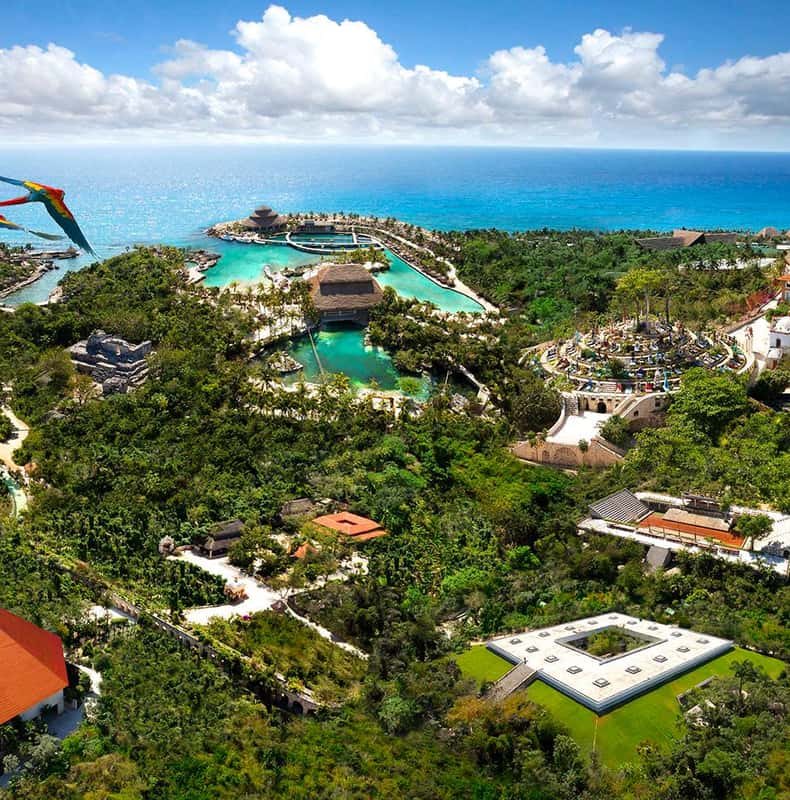
From Cancun: Full Combo to Xcaret Park!
Entry with fins and a snorkel mask, the beach, the aquarium, the aviary and the rainforest trail, with transport you choose to add at booking.
From $186 per person
Check Availability
Tour to Cozumel by Catamaran with Snorkeling and Lunch included
A catamaran day to the island opposite, with the ferry both ways, snorkelling gear, lunch and drinks. It does not enter the park, and port taxes are paid on the day.
From $195 per person
Check AvailabilityNext: book one that reaches the gate near opening, whatever the month. Every fare sits side by side on Xcaret Tours.